AI Automation in Clinical Labs: Intake to Reporting
TL;DR
See how medical and diagnostics labs are automating raw testing outputs and patient report delivery while staying fully HIPAA compliant.
The Clinical Lab Backlog
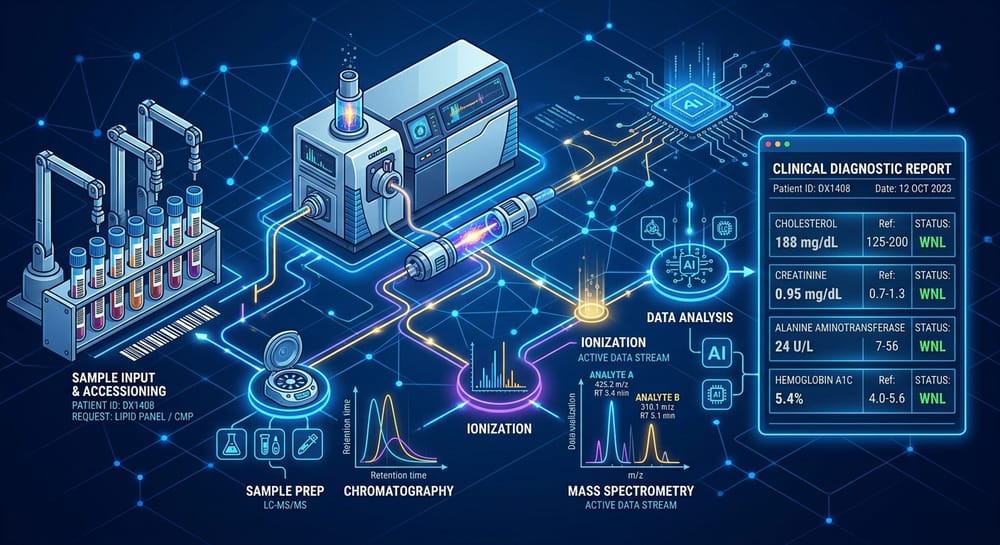
Diagnostic and research labs operate under intense pressure. They must process hundreds of incoming biological samples, verify test orders against electronic health records (EHR), map machine results, and format detailed patient reports.
Doing this manually is a massive clerical bottleneck, delaying critical patient treatments and increasing the risk of data entry errors.
Secure Lab Agents in Action
Our specialized clinical lab agents streamline these multi-step workflows:
- Lab Order Parsing: Automatically ingests clinical order files, extracts patient codes and specific diagnostic indicators, and maps them directly into LIMS.
- Machine Log Formatting: Reads raw spectrometer or analyzer logs, matches them with client records, and formats the values into beautifully structured PDF reports.
- Secure Delivery: Triggers secure patient notifications while maintaining strict compliance protocols.
Absolute Security and HIPAA Compliance
In clinical lab environments, patient data security is non-negotiable. Our lab agents operate with strict access permissions, automatic PII masking, and isolated cloud servers, ensuring patient data remains secure and fully compliant with healthcare regulations.
Where the Boundary Sits in a Laboratory
Automation in a laboratory setting only works if the line between preparation and release is drawn explicitly, and drawn before anything is built.
Preparation is where agents belong. Registering samples from requisition forms that arrive in a dozen formats, chasing missing patient or client identifiers, pulling analyser output into the report template, checking that required fields are populated, and assembling the delivery package are all high-volume, rule-bound steps that consume qualified time without using qualified judgement.
Release is not. The decision that a result is correct and may go out stays with authorised staff, and the system should make that an explicit action rather than a default that happens if nobody intervenes. An agent that notifies a clinician after sign-off is useful; one that could notify before sign-off is a defect regardless of how well it performs.
Between those two sits the exception handling, and this is where the design earns its keep. Values that fail a plausibility check, results outside expected ranges, and fields the parser scored below threshold should go to a technologist with the source document attached, not into the report. The target is a system where the exceptions are visible and few, rather than one that appears to handle everything and occasionally handles something wrongly without saying so.
Further reading
- Privacy Framework — NIST
- AI Risk Management Framework — NIST
Want to discuss these automation patterns?
We custom-program these exact multi-agent systems with absolute human approval gates and strict role security rules.