Human-in-the-Loop AI Systems
In short
Combine the speed and scalability of AI with the safety, control, and absolute accuracy of human oversight.
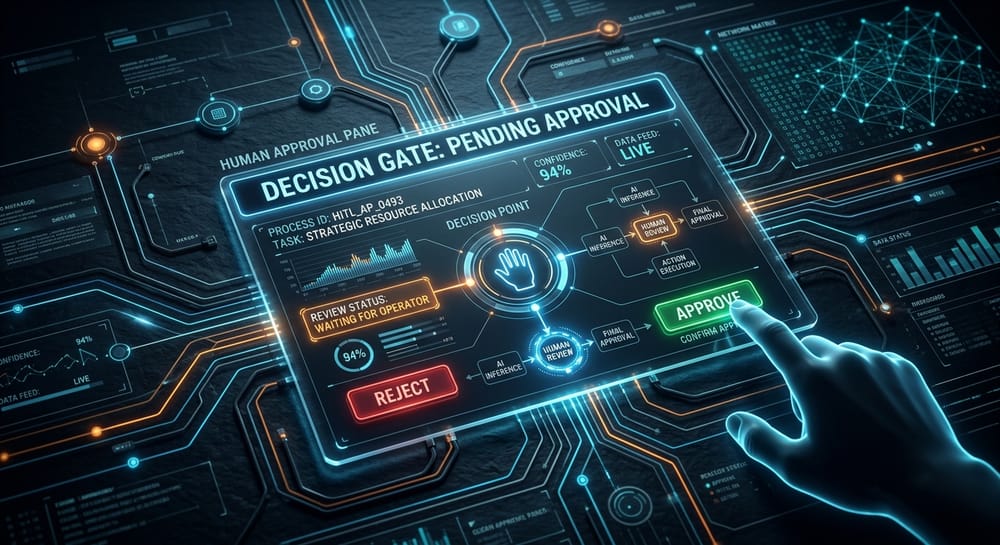
Complete, blind AI autonomy in business is risky. Our Human-in-the-Loop (HITL) engineering methodology guarantees that while AI handles the heavy lifting, manual extraction, drafting, and sorting, your human staff remains in complete control. The AI drafts actions, and humans approve them with a single click, ensuring 100% compliance, brand safety, and error prevention.
Key Architecture Features
Click-to-Send Draft Mode
Emails, quotes, and reports are saved strictly as draft states until clicked by a manager.
Dynamic Confidence Thresholds
Transactions with high confidence (e.g. 95%+) execute instantly, while anything lower is routed for manual review.
Staff Notification Loops
Urgent issues or low-confidence documents trigger instant Slack/Teams pings with interactive quick-action buttons.
Technical System Specifications
- [1]Custom human-review dashboard built in modern React
- [2]Encrypted temporary state storage for pending approval items
- [3]Audit log logs which human approved, edited, or rejected each AI output
Execution Blueprint
Accounts Payable AP Approval
The AI AP Agent reads a $4,500 shipping invoice, extracts all line items, identifies that it matches PO #9834, but notices a 4% shipping fee discrepancy. Instead of processing, the agent flags the invoice in red on the finance dashboard, presenting a "Review discrepancy" card to the accountant for rapid manual sign-off.
Standards and further reading on Human-in-the-Loop AI Systems
The architecture above follows published standards rather than our own house rules. These are the primary sources, so you can check the reasoning yourself.
- AI Risk Management Framework — NIST
- Top 10 for Large Language Model Applications — OWASP Foundation
Common questions about Human-in-the-Loop AI Systems
The questions that come up when this sits between your existing systems, answered plainly.
Anything that sends money, signs or commits to an agreement, or contacts a customer for the first time. Those are gated by default. Beyond that, you decide, and the gate can be tightened or relaxed per category once you have seen the agent run.
It would, which is why the agent does the work and the person only makes the call. Reviewing a prepared decision takes seconds against the minutes it takes to produce one, and categories that prove reliable in shadow mode can be released to run unattended.
Each action, what triggered it, the data the agent acted on, which gate it passed through and who approved it. It is written to be read by an operations lead rather than an engineer, because the person who needs it during an incident is rarely the one who built it.
Deploy Human-in-the-Loop AI Systems in your stack
Book a Free 1-Hour Consultation and get a custom feasibility blueprint built strictly for your stack.